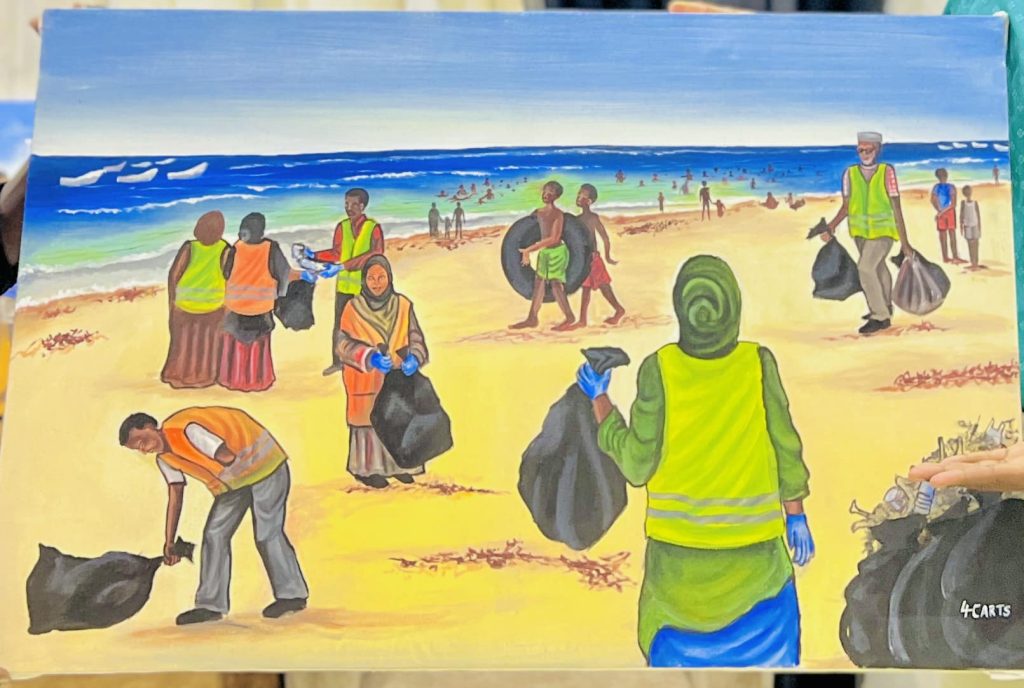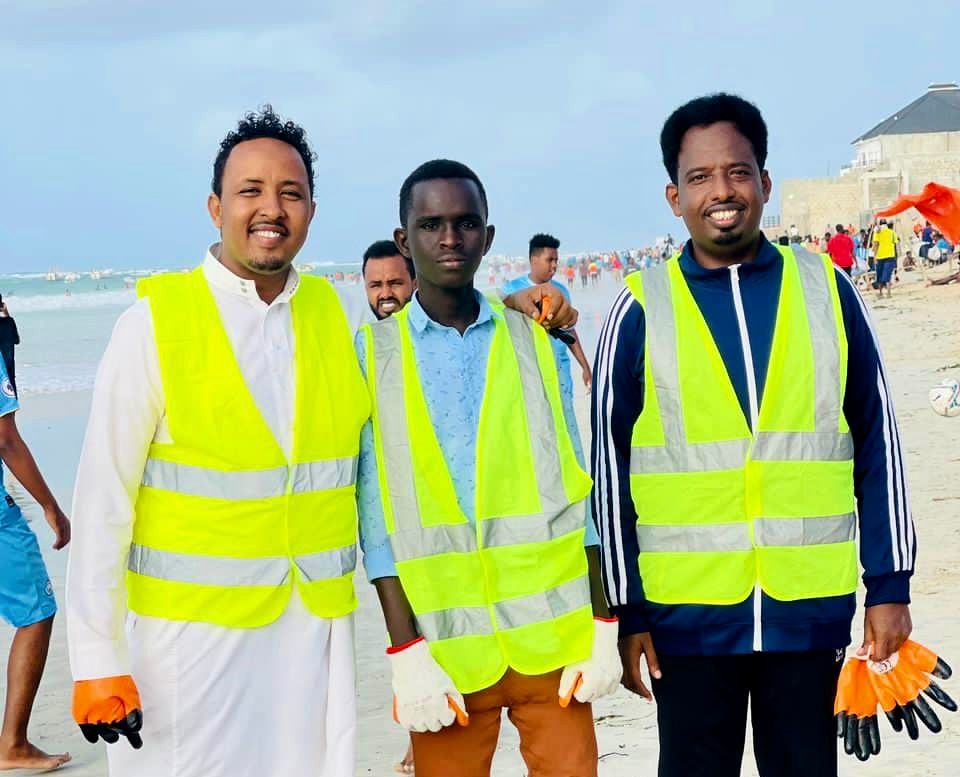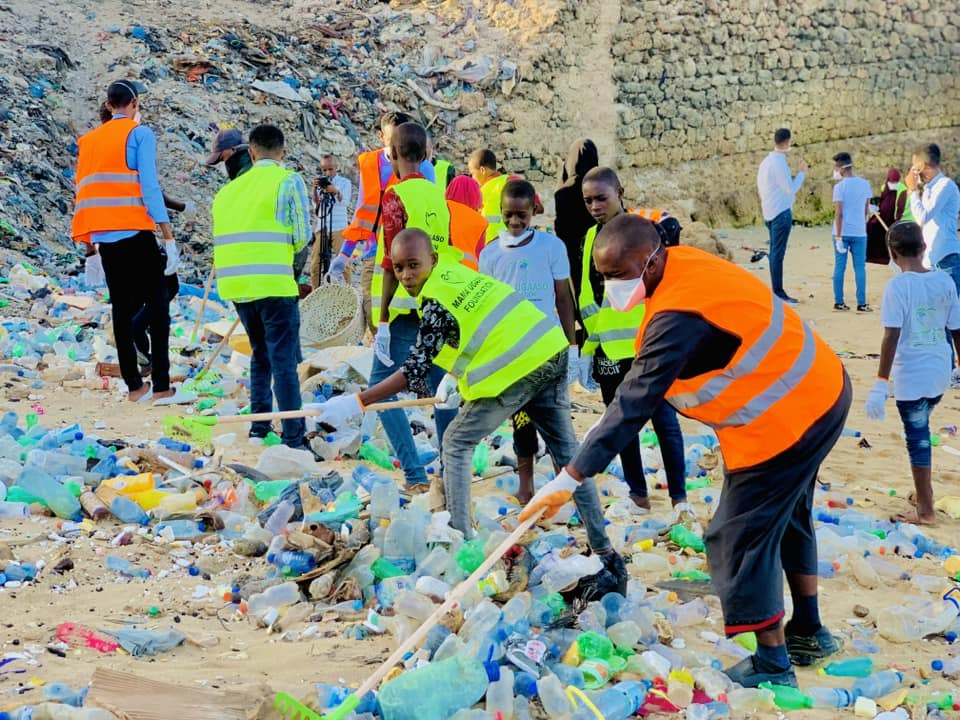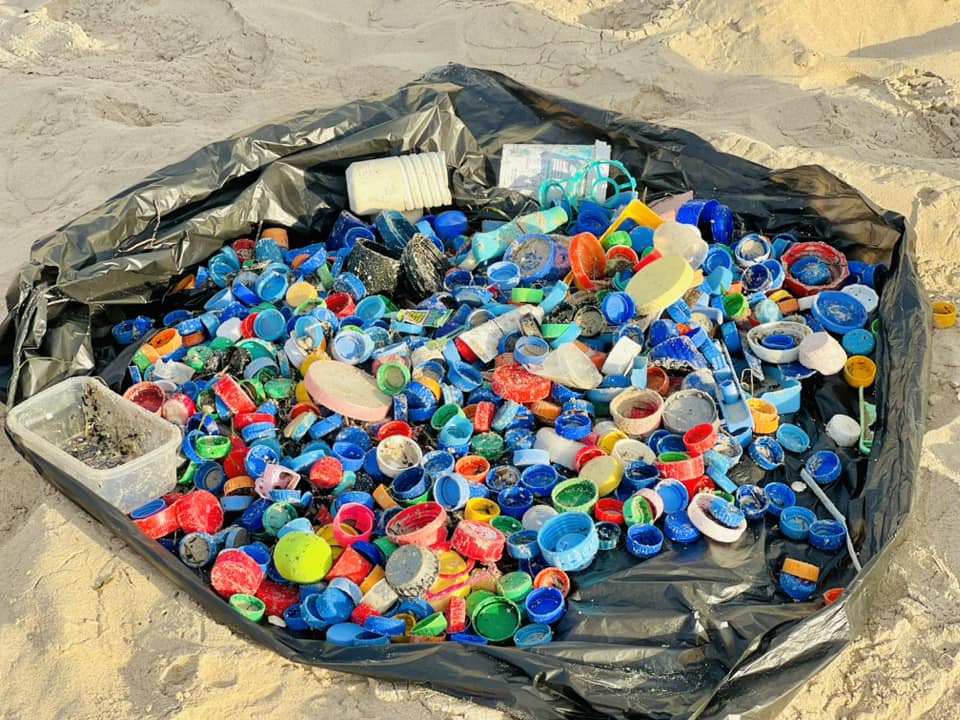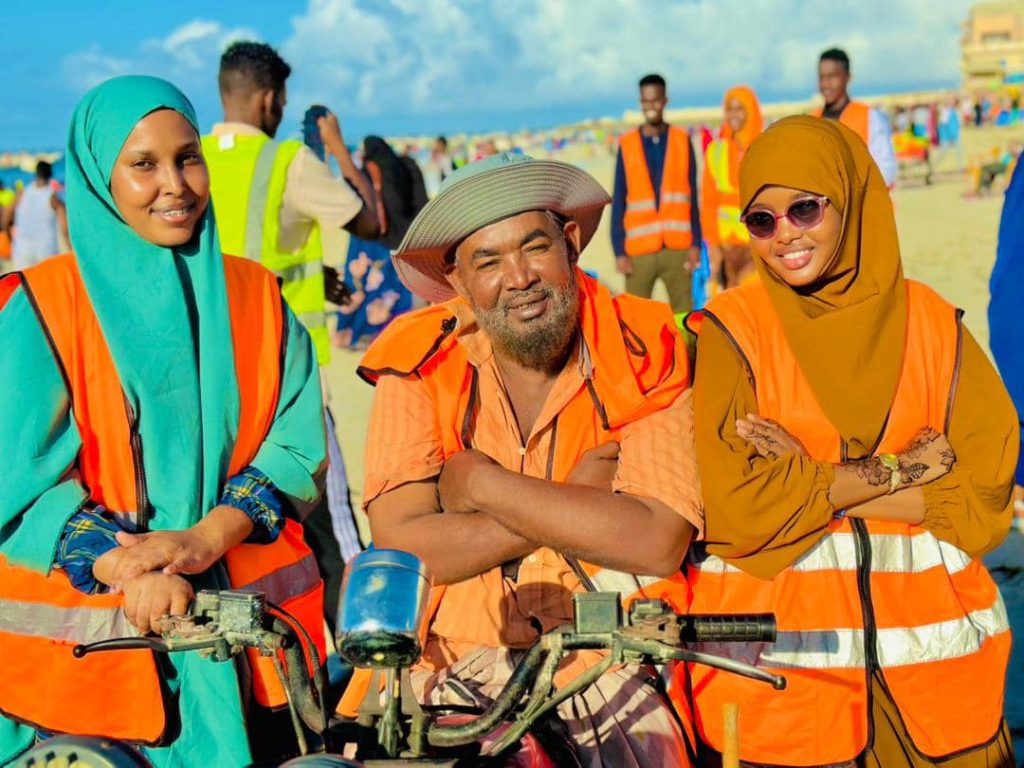
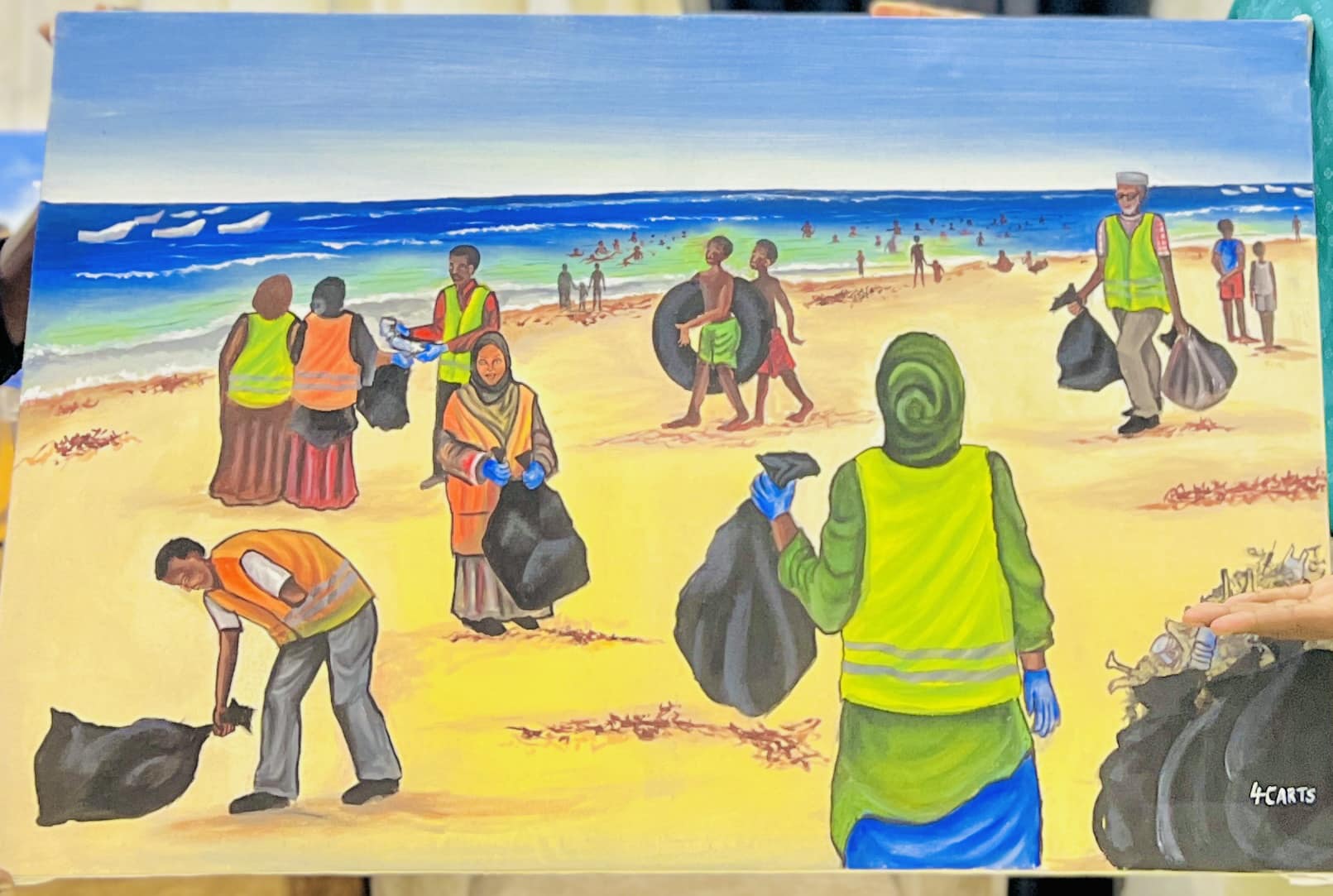
On any given Friday morning, as the sun rises over Mogadishu’s iconic Liido Beach, a group of passionate youth can be found clearing the shore of the debris and waste that accumulates throughout the week. These volunteers, led by Abdisatar Arabow, have devoted themselves to restoring and maintaining the beauty of Liido Beach for the last three years—without missing a single Friday.
What started as a one-day activity has grown into a movement that symbolizes hope, environmental activism, and the power of community-led efforts to protect Somalia’s natural treasures. Green Media Initiative sat down with Abdisatar to learn more about the story behind this remarkable campaign.
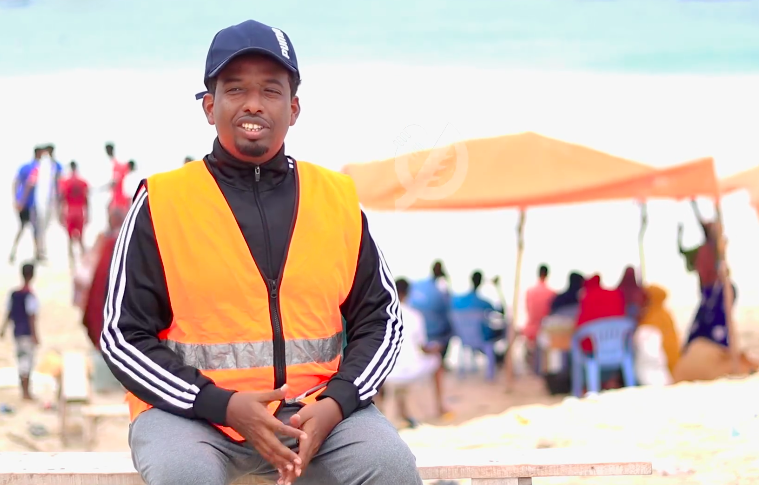
“It All Began with a Facebook Post…”
When asked how this campaign began, Abdisatar reminisces, “We initiated this campaign three years ago. It started with a short post shared on social media, requesting youth engagement in beach cleaning and community volunteerism. Initially, the team was composed of just six members, and today, as you can see, our numbers have grown.”
Abdisatar explains that the idea for the campaign was sparked by the increasing environmental damage he and his team witnessed—particularly the proliferation of plastic waste along the coastline. “We decided to clean our beach instead of leaving these solid wastes—especially plastics—scattered along the coast. The beach is a point of beauty and attraction, and we felt we needed to protect it,” he says.
That determination, combined with a deep love for Mogadishu’s natural environment, led to the formation of a campaign that would soon span 147 consecutive weeks of action.
Through rain, security challenges, and even national exams, the volunteers never missed a single Friday. “Thank God, we didn’t skip a week,” says Abdisatar proudly. “Even if the roads are closed, or if it’s raining, or if there’s a nationwide examination, we maintained the campaign through all these conditions. Even during public holidays or the holy month of Ramadan, we showed up.”
The dedication of these volunteers is driven by their love for the environment and their commitment to the campaign’s slogan, “Environment is our life.” As Abdisatar explains, this simple yet powerful mantra energizes the team each week, giving them the strength to return every Friday morning to clean the beach.
Achievements That Go Beyond Cleaning
Reflecting on the campaign’s impact, Abdisatar highlights several major successes. “One of the greatest achievements we’ve had in the past 147 weeks was preventing the dumping of waste into the beach. We also conducted research on the impact of plastic on the coastal environment,” he notes.
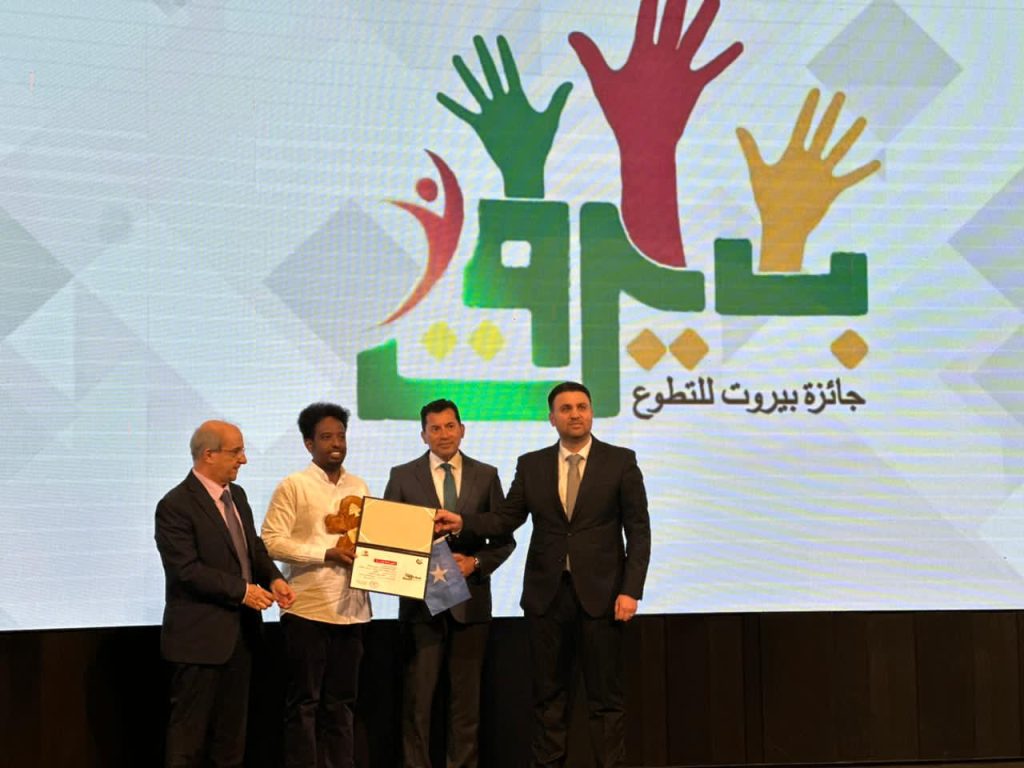
Their work hasn’t gone unnoticed beyond Somalia’s borders either. The team was recognized in a regional championship on voluntarism organized by 22 Arab states in Lebanon, where they took first place. “We are happy with these accomplishments,” Abdisatar says, “especially since we’ve done it all without external funding. We contribute our own resources and energy to sustain the campaign.”
Challenges Persist, But So Does the Mission
Despite their achievements, the campaign is not without its challenges. “Initially, the key challenges were the road closures due to security reasons, but that’s less of a problem now,” Abdisatar explains. However, limited community awareness remains a significant issue. “Some people might even think you’re mad if they see you cleaning the beach,” he laughs. “Waste has been dumped here for hundreds of years—it’s not something we can clean up overnight.”
Another recurring challenge is the continued disposal of plastic materials on the beach, particularly during the night. “It’s an endless cycle,” Abdisatar admits. But the team’s resilience is unshakable, and they are determined to keep fighting the good fight.
A Local Effort with Global Ties
Beach cleaning isn’t just a local initiative, as Abdisatar points out. “It’s a global campaign. Around the world, beach cleaning is a routine activity meant to reduce solid waste in coastal environments. This waste threatens ocean biodiversity and the ecosystem as a whole.”
The importance of beach cleaning efforts goes far beyond simply beautifying coastal areas. Every piece of waste removed from the beach represents one less danger to marine life and coastal ecosystems. Plastics and other debris can be devastating for ocean biodiversity—entangling marine animals, being ingested by fish and seabirds, and even breaking down into harmful microplastics that infiltrate the food chain. Globally, coastal and oceanic ecosystems are already facing tremendous pressure from climate change, pollution, and overfishing, and every action taken to reduce these impacts can have ripple effects for the health of the planet.
By taking action locally in Mogadishu, Abdisatar and his team are part of a much larger global movement. Countries around the world—both developed and developing—are grappling with the same issues of marine pollution. From the shores of the Pacific Ocean to the beaches of the Mediterranean, coastal clean-up campaigns are vital in addressing this widespread problem.
For the volunteers of Liido Beach, their work ties directly into this global mission. They are contributing to the worldwide push to protect coastal areas, oceans, and the wildlife that depends on them. But even more importantly, their efforts are an inspiring example of how local, grassroots initiatives can play a crucial role in addressing global environmental issues.
A Final Message to the Community
As the interview concludes, Abdisatar has a message for the people of Mogadishu and beyond: “If you can’t clean the beach, please don’t throw or dump waste into it. Mind your own waste—that’s the least thing you can do for your environment and your country. Let’s protect our environment. It’s our responsibility to preserve it.”
With each passing week, the volunteers of Mogadishu’s beach cleaning campaign demonstrate the power of collective action and the lasting impact of caring for one’s environment. Their efforts stand as a beacon of hope, reminding us all that change starts with small, consistent steps and a shared commitment to a healthier, more sustainable future.
Experience the story in action by visiting our YouTube and Facebook pages to watch the video of Mogadishu’s beach cleaning campaign and see the remarkable dedication of these volunteers. Click the links below.
Watch the Story on YouTube:
Also you can watch the Story on our Facebook: https://www.facebook.com/gmisom/videos/1176197970197160/