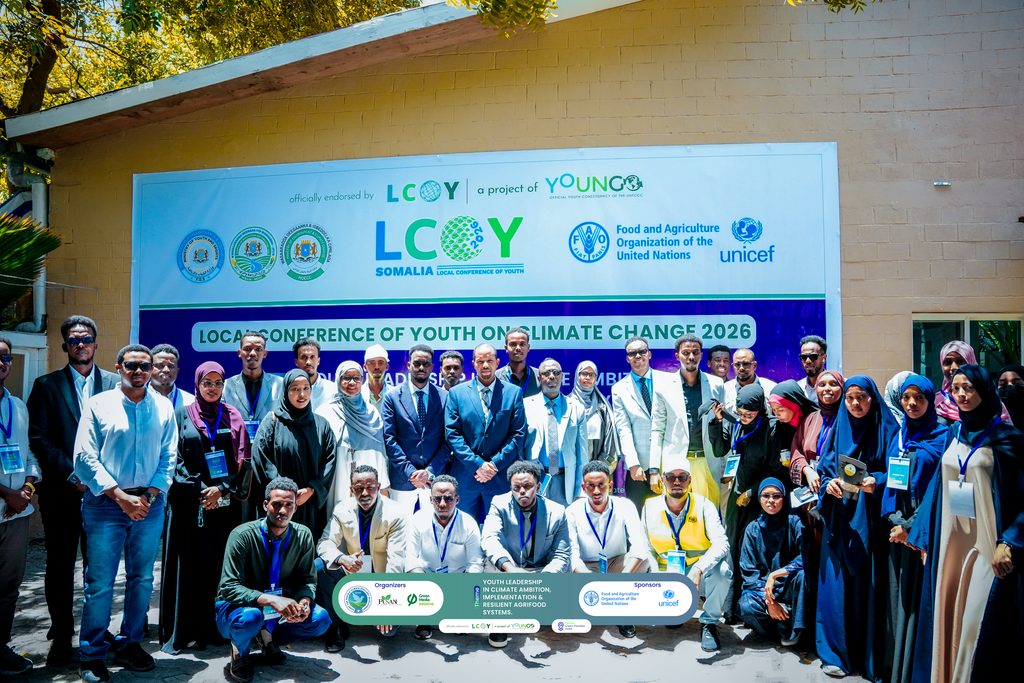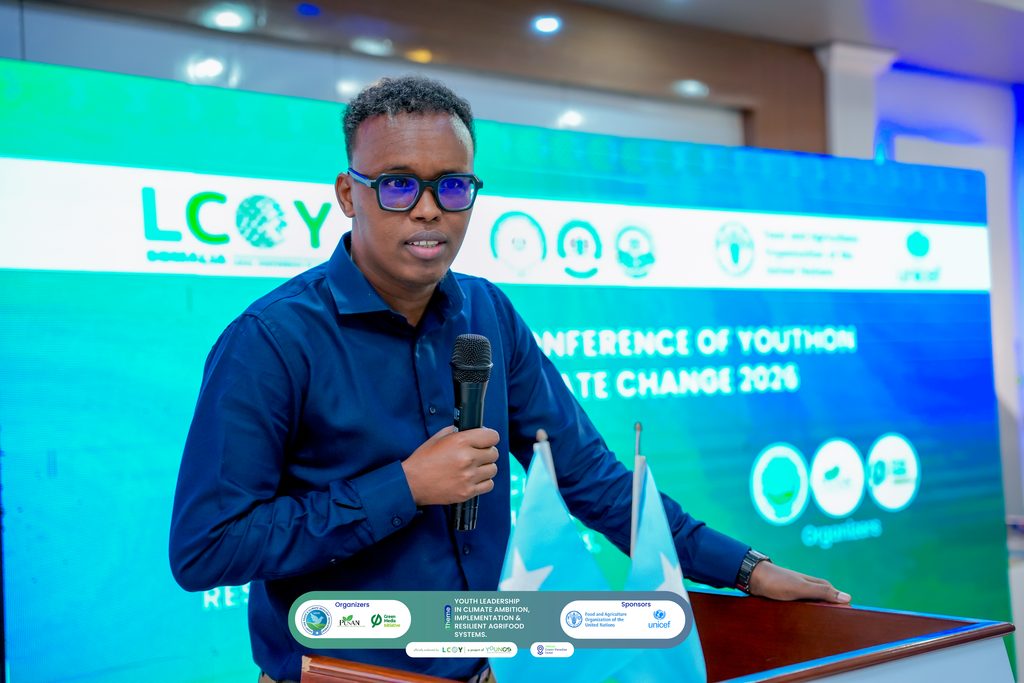
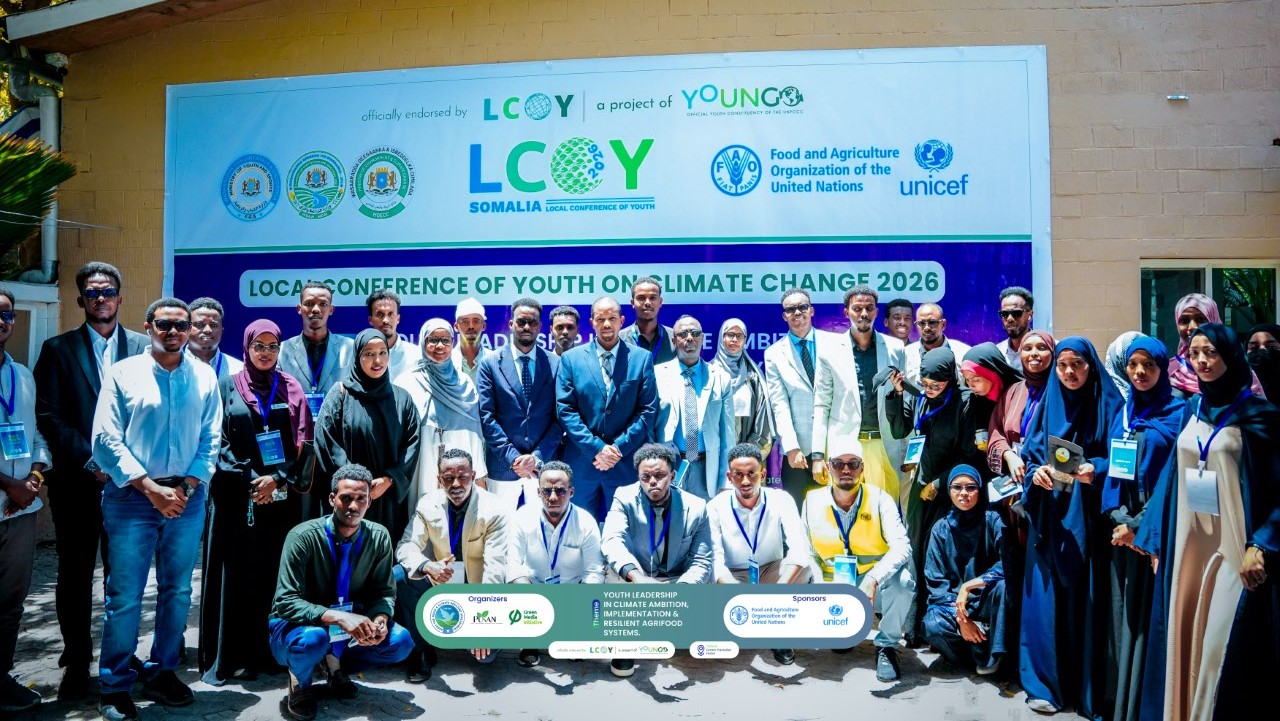
Mogadishu, Somalia | October 2026 – Somali youth are turning their climate concerns into a collective call for action. At the Local Conference of Youth (LCOY) Somalia 2026, held on 7–8 October in Mogadishu, 100 young people came together to debate climate challenges, review policy priorities, and shape recommendations for Somalia’s climate future. The conference marked an important step in strengthening youth participation in climate decision-making and connecting local priorities to national and global climate discussions ahead of COP31.
Organized by Green Media Initiative (GMI), PUSAN and APCRD, with support from UNICEF Somalia and FAO Somalia and in partnership with government institutions, the conference brought together young climate advocates, innovators and stakeholders to turn consultation into collective action.
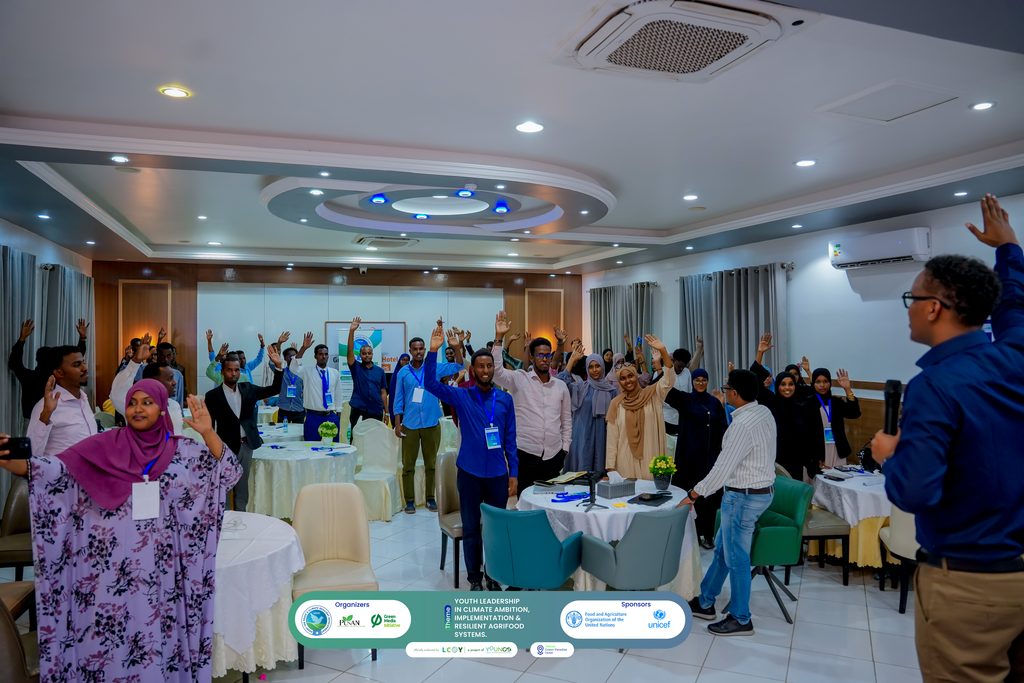
At the heart of the conference was the Somalia National Youth Climate Statement 2026. Informed by more than 600 online survey responses and over 279 consultation participations, the draft Statement was discussed, debated and reviewed by youth participants. Through this collaborative process, they refined and finalized their demands before voting to validate the Statement on 8 October. The result is a shared youth position outlining ten priority demands on climate finance, resilient agrifood systems, water security, early warning, green jobs, environmental restoration and meaningful youth representation in climate governance.
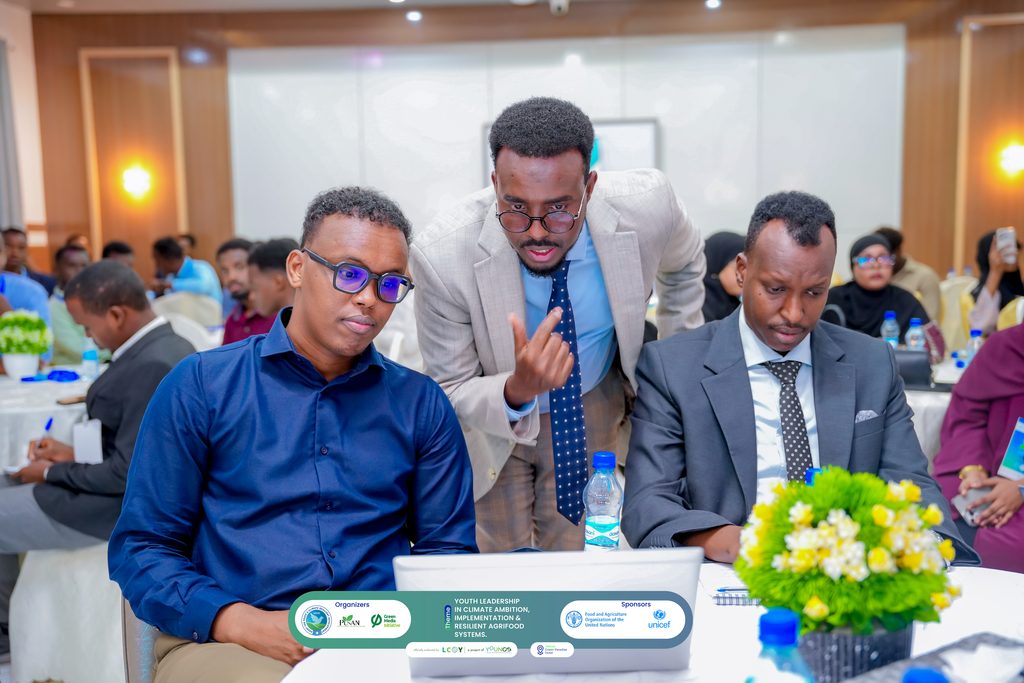
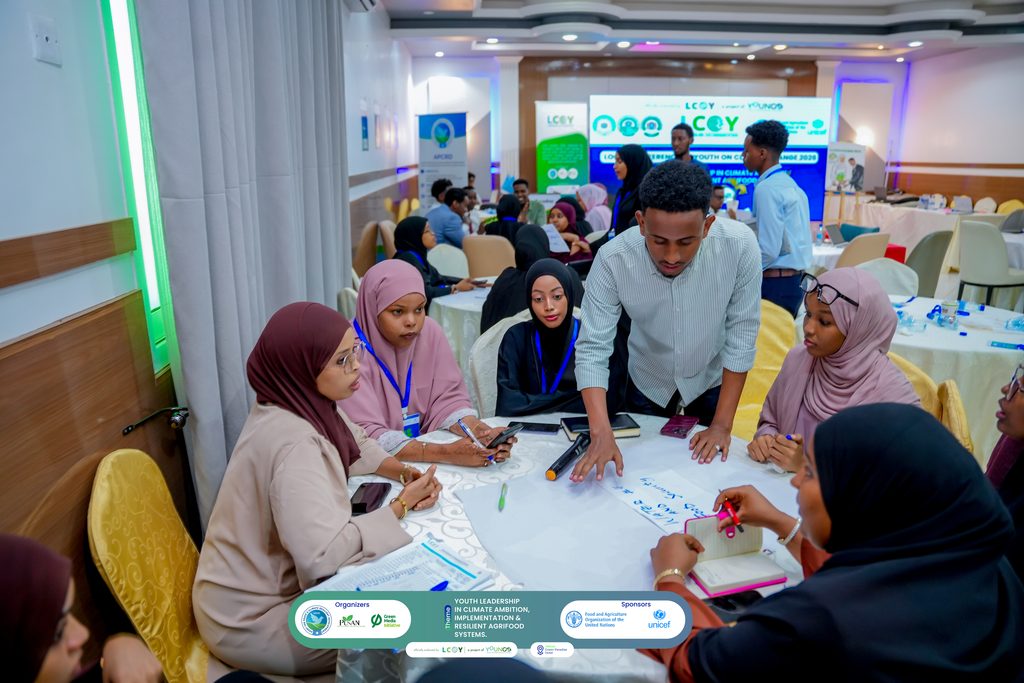
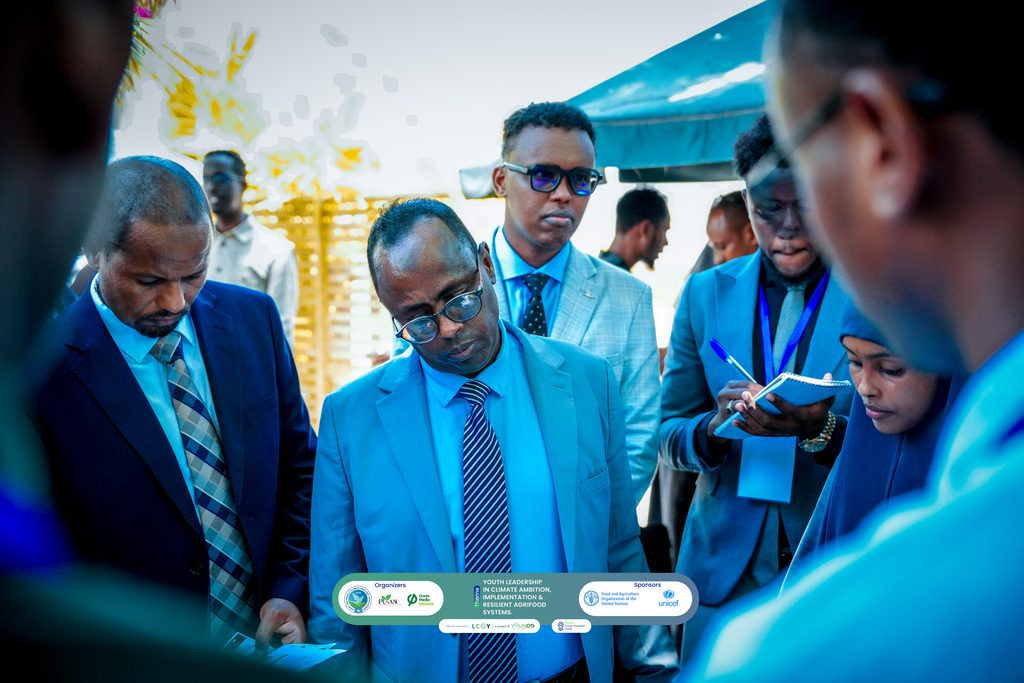
Beyond policy recommendations, young people recognised that climate action must also begin with their own commitments. Participants agreed to take practical steps in their communities, including raising climate awareness, restoring nature, supporting green enterprises and advocating for climate action. Eight youth-led businesses also showcased their innovations at the Youth Innovation Expo, demonstrating the role young people can play in advancing locally driven climate solutions and sustainable livelihoods.
An important outcome was the commitment by the Ministry of Environment and Climate Change’s Director of Climate Change to advance the Statement within Somalia’s national climate position and support its presentation at COP31. This creates an opportunity for priorities shaped and validated by Somali youth to reach national, regional and international climate discussions.
For Green Media Initiative, LCOY Somalia 2026 demonstrates the value of creating meaningful spaces where young people can move beyond being consulted to actively shaping climate priorities, agreeing on shared demands and committing to action. With the National Youth Climate Statement validated, the next challenge is to translate its recommendations and youth commitments into tangible progress, while ensuring Somali youth voices are heard at COP31 and beyond.